
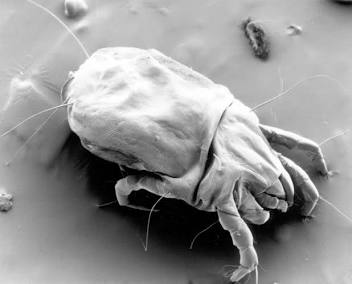
Exposure to house dust mites is recognised as a major cause of allergies worldwide. Common allergic diseases include asthma, rhinitis (hay fever), conjunctivitis, and eczema, all of which are aggravated by contaminated ceiling dust.
How Dust Mites Cause Allergic Sensitisation
Allergy symptoms can vary according to age, lifestyle, and indoor air quality. Dust mites thrive in warm, humid environments rich in dander, skin flakes, and nesting debris found inside unmaintained ceiling spaces.
Mite droppings contain digestive enzymes (notably Der p 1 and Der f 1) that break down human skin cells. When these microscopic particles are inhaled, they provoke an immediate immune response in sensitized individuals, triggering severe respiratory irritation.
The Ceiling Cavity as an Allergen Reservoir
Years of accumulated roof dust act as an incubator for millions of dust mites. Thermal air currents and ceiling penetrations (like downlights) push these allergen-rich dust particles directly into bedrooms and living spaces.
Vacuuming the ceiling cavity with industrial HEPA filtration removes this massive reservoir, resulting in immediate relief for allergy and asthma sufferers.
Concerned About Roof Cavity Hygiene?
Don't let rodent feces, dust mites, or bird biohazards jeopardize your family's health. Our HEPA ceiling vacuuming and hospital-grade sanitiser eliminate the root causes of indoor air contamination.